STIMS Strategy for life long learning for intrepreneurship

Professionals in every field must constantly equip themselves with the latest skills to achieve new solutions for process problems.

Being adept at ‘Transformational skills’ and ‘system thinking’ constitutes a lifelong learning strategy required to develop a stream of New Solutions, a must to survive and succeed in the 21st century economy
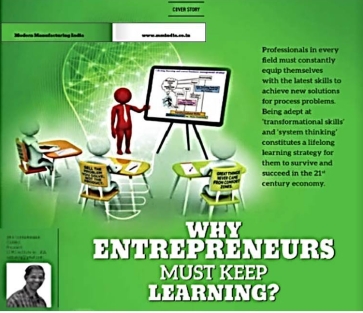
MMI Cover story image

Who exactly are ‘intrepreneurs’?
We hear a constant drum beat for professionals to be entrepreneurial, capable of handling a variety of jobs and problems. This is in total contrast to the standardized
and de-skilled task-oriented replication activities. There are many opportunities to integrate knowledge from various sources – from other workers, knowledge available across departments, with the suppliers as well as with the customers or end-users. The advent of smart phones, Facebook, Google and other search engines also augment this ability to aggregate information from across the globe and convert them into new knowledge. The result is a “new solution” of high added value. They are heralded as “entrepreneurial”. The new term used for such entrepreneur working inside a company – as opposed to a startup operation – is “Intrepreneur”.

Life Long Learning Strategy:

Modern Manufacturing India, a Publication of the Indian Machine Tool Manufactusers  Association (IMTMA) carries the cover page article authored by STIMS Institute. This article provides a strategy for life long learning for entrepreneurs and intrepreneurs.

STIMS Cover story MMI Jan. 2018 issue
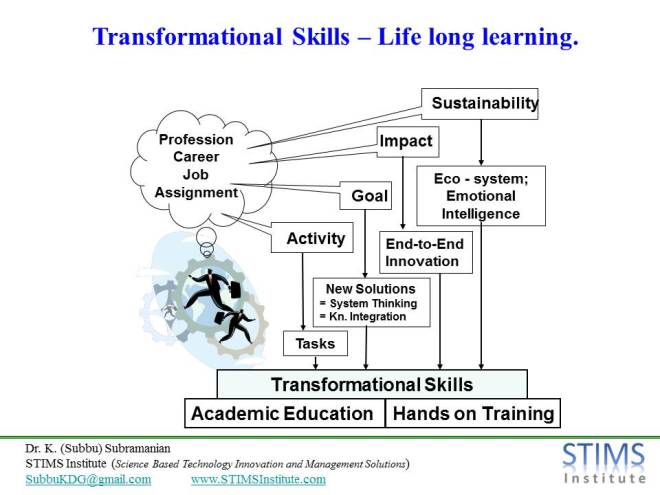
Slide22

The MMI magazine January issue can be accessed at: http://www.mmindia.co.in/flipbook/jan2018/
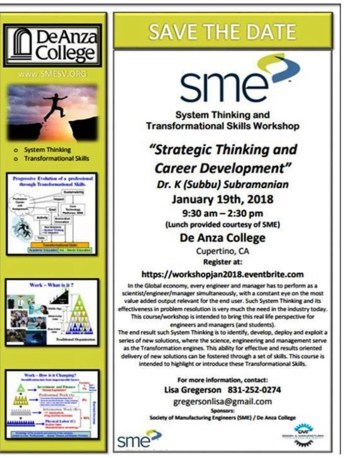
Strategic Thinking and Career Development

STIMS Institute offered a workshop on Jan. 19, 2018 in the Bay Area, CA.  Sponsored by SME Silicon Valley Chapter, this workshop was hosted by De Anza College, Cupertino, CA. Thanks to Lisa Gregorson – SME SV and Mike Appio – Dept. Head, Mfg. education at De Anaza college for their help, support and collaboration.

Every one who studies the impact of AI and Automation forecasts a grave upheaval in the near term for large scale human employment. But they all conclude stating that “Innovation” and “Technology” will take care of it. May be they are right. Until that future comes there is no alternative for employees (and employers) today other than becoming “System Thinkers” and “Transformational” in their skills. A systematic outline of this need is followed by an even more systematized method and skill sets to be practiced are outlined in this workshop.

The details presented in this workshop can be seen at: SME SV Workshop  Follow the workshop contents and answer the class work questions contained in it.

Let us know what you think? Contact us

sme-sv-workshop-poster


STIMS Institute offers two key technical publications for Abrasive Finishing Processes

Professional societies like ASME serve the valuable role to archive and disseminate critical information and knowledge of near term as well as long term value. Two such publications present both the theory as well as applications pertinent to surface generation processes using abrasive tools. These processes are commonly known as grinding processes. They span a wide range of industries and applications and needs. We at STIMS Institute are pleased to offer these papers for broader use and dissemination of knowledge.

Please note that these publications may be copy right protected. For copies of these publications please contact ASME.

Click to access manu-17-1209-final-corrected-proof-1.pdf

Click to access published-paper-imece2015-52952.pdf

Developing a frame work for Effective Collaboration between Academic Research and Industrial Outcome.

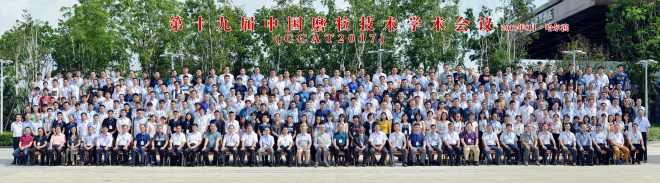
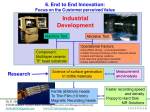
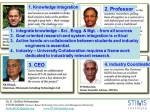
We were invited to present a Key Note lecture on August 5, 2017 at the Chinese Conference on Abrasives Technology at Harbin Institute of Technology, Harbin, China. Inserted below are main points, some images and a link to the full presentation.

Key Note lecture final

IMG_4028

IMG_4038

Acknowledgements

  • Thanks to Prof. Zhang at HIT, to the organizers of CCAT and Harbin Institute of Technology
  • Thanks to Dr. Jinsheng Wang, GM, Intelligent Grinding   Technology (Shenzhen) Co., Ltd., my friend and host for this visit
  • Thanks to many friends and colleagues across the globe in the industry as well as in the academia.
  • This talk is a summary of many years of experience  and successful collaboration between Academic researchers and Professionals in the industry across the globe.

Outline

  • 21st Century economy requires New Solutions with deliberate focus on Academic Research; That Integrates knowledge from all sources
  • New Solutions require three types of Knowledge:
    • Academic learning
    • Hands on Experience
    • Transformational Skills.
  • New Solutions in Grinding Processes are the result of collaboration between Academic Research and Industrial Applications enabled by Transformational Skills.
  • Transformational Skills are necessary for industry /   university collaboration
  • Examples and Case Studies.

Slide22

SUMMARY

  • 21st Century Research has to be targeted to deliver New Solutions
  • This requires integrating knowledge from all sources.
  • Knowledge Integration is enabled by System Thinking:
  • Every solution is integration of Science, Engg. And Mgt.
  • Focus on the big picture, not merely the dots.
  • Three sources of Knowledge are simultaneously required today:
    • Academic Education
    • Hands on Training
    • Transformational Skills.
  • During this talk we have described the “System Thinking” and “TS”.
  • We have also shown examples of how these are useful for promoting effective industry/university collaboration.


STIMS Institute offers Industry focused training for fifth year in a row, this time at Shenzen, China.

Student Feedback:

 “I conclude this course with 3 observations: Very important, Very timely and Very valuable”.

“I’m not an engineer. I feel this course in not only for technical person, but for system thinking and much more”.

0815_30

Education, Process Innovation and End to End Innovation are the focus areas of STIMS Institute. Each of these three focus areas are interconnected. education that is merely academic is less valuable today in the world where more than 80% of what is needed can be obtained through Google. Today education has to be holistic (i.e.) system oriented. That implies scientific fundamentals together with an emphasis on application of the science and the strategic reasoning required to make such education relevant and useful in the real world. Such Education was offered for the fourth year in a row . This leads to over 120 senior engineers, managers and teachers trained to meet the high end professional needs in the manufacturing sector.

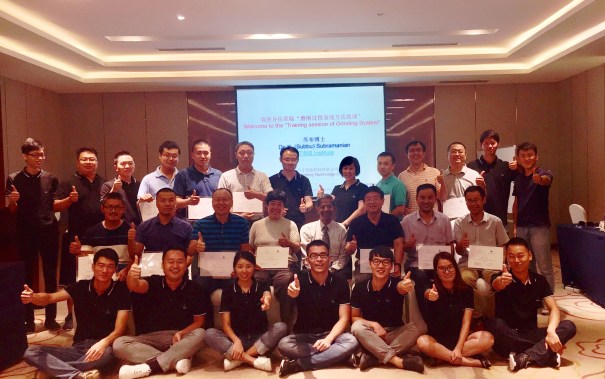
The two day course was offered at Shenzen, China on August 9 and 10, 2017  in collaboration with Intelligent Grinding Technology (IGT) Ltd. http://www.grindoctor.com

0815_25

The System Approach for Precision Manufacturing – Grinding Processes.

  2 Day Course – Outline.

Day 1 – AM:

Introduction.

  1. Why should we grind?
  • Critical and enduring role of physical processes like grinding in manufacturing and especially in Precision Components Manufacturing as well as surface generation requirements.
  • Examples of grinding processes used in a wide variety of: Work materials, machines, components and applications
  • Role of grinding processes in traditional applications as well as emerging needs like high efficiency IC engines, computer parts, LED, PV and wind energy components manufacturing.
  1. The System Approach to Grinding Processes:
  • Every process is an Input / Transformation / Output system
  • “Transformation” represents the Science of the Process
  • System Approach requires integration of Science, Engineering and Strategy
  • Grinding Processes are Input /Transformation / Output systems for surface generation to meet critical functional needs and process economics.

BREAK

IMG_4155

  1. The Science of grinding: The microscopic interactions that occur at the grinding zone and their quantification
  2. Inputs to the grinding process and how they impact the microscopic interactions:
  • Work Materials and components
  • Abrasive and dressing tools, coolants and other consumables
  • Machine Tools (key element of investment and process design)
  • Process parameters (that are selected as part of process design and can be changed at the shop floor)

LUNCH

Day 1 – PM:

  1. Measurement and Analysis of grinding processes
  2. Case Studies Demonstrating the use of the above for shop floor problem solving

 BREAK for Dinner

After Dinner Session:

  1. Tutorials and data driven problem solving

DAY 2 – AM:

Recap of day 1 lessons.

  1. Technical Outputs – What are the requirements to be met when using grinding processes

BREAK

  1. System Outputs – the Why? strategic and economic considerations pertaining to grinding processes

LUNCH

IMG_4242

PM:

  1. Application of the System Approach – Case Studies
  • Truing & Dressing of CBN grinding wheels
  • Optimal use of CBN grinding solutions
  • Simple Solid Shape (S3) grinding – High MRR low WIP, short lead time and flexible processes
  • Processes for micro – chip, magnetic head and LED substrate fabrication.
  • Machining to Grinding Processes

BREAK

  1. Student Feed back
  2. Certificate Presentation.

The students in this course consisted of Senior Engineers, Business Head and V.P. of manufacturing companies.

Student feed back:

  • This course is worthy. My customer want to use CBN wheel, but machine tool can’t satisfy requirement. I still have not good method. From this course, I get some enlightenment on how to make the best use of the available machine and other resources.
  • Our parent company is from Belgium. Sometimes we want to change the grinding process, but it’s not permitted. After this course, I can use data to evaluate grinding process. If we have data support, Belgium can agree to that. I will use system approach to evaluate present method when I go back.

IMG_4203

  • This course gives a lot of help in supervising new product development.
  • In the past, I work with experience. I learned a lot of basic knowledge in this course, which is very helpful for designing machine tool. I learned in this course how to use knowledge to analyze and solve problem. We plan to develop single crystal silicon grinding machine tool with system approach.
  • It is the first time to learn grinding theory, which is helpful for my next work. In this course, I connect knowledge I learned in college with present work. In past, I always feel the knowledge I learned is not useful. Today I understand I didn’t connect them with my work. In future, I will promote my product with the knowledge, scientific method and data analysis.
  • I’m very impressed by the lessons on economic output. In the past, we deal with price with very simple and rough method. Now I know I can evaluate the value from variety of aspects. I can give customer a list, which makes customer understand the value we bring and accept our price. We should promote the product’s quality, but not just low price.

0815_28

  • System approach concerns input, interaction and output. It also can be categorized by the work of engineer, science and management. Before the course, I know the first three interactions, but I know there are 6 interactions. I feel it is more reasonable. I also learn how to connect all interactions with input and output by using power monitoring. When I go back, I plan to use knowledge I learn from this course to solve 2 to 3 problems. If it works, I want to spread system approach and do continuously improvement.
  • I feel this course is very worthy. Thanks for IGT for co- organizing this course.
IMG_4207
Dr. Subbu with STIMS Institute Alumni Dr. Xuefong Bi and Dr. Jinsheng Wang, start up entrepreneurs of Intelligent Manufacturing Co, in China.  They helped to co-organize this course.
  • We are now focusing on hard and brittle grinding. This course helps me to open the black box of grinding, and let me to see interactions and how to solve problem. I have more significant understanding to grinding process.
    • System approach will help me in work and life. Knowledge in this course is very deep, I need to learn more after this
    • After I go back, I will transmit system approach with my leader and colleagues. Now we are doing a project about ceramic material grinding, so I want to apply system approach on this project.
  • I conclude this course with 3 words: Very important, Very timely and very valuable. Dr. Subbu, is very professional. He has very clear logic. If Dr. Subbu have more opportunities to contact the market in China and spread system approach, the effects will be better.
  • I’m not an engineer. I feel this course in not only for technical person, but for system thinking and much more.