Blog

Year End Review – 2014 and Greetings for the New Year

Happy New Year!

2014 has been a great year of accomplishments for the STIMS Institute. During the third year of this young company, we have made great strides in a number of areas. Our clients / collaborators now include:

  • Educational institutions (IIT – Chennai, SNHU, MIT, TCE – Madurai)
  • Industrial clients (in India, NA, China, Colombia)
  • Industry Organizations (IMTMA, MassMEP)
  • Industry Sectors (Machine Tools, Auto parts manufacturing, Energy services, Engineering Services)
  • Fellow consulting services
  • Industry Publications.

We thank each and every one of our collaborators for the opportunity to work with them. It is through such collaboration that we can build an eco-system that sustains the development and growth for all. We look forward to your continued support and further opportunities to expand the universe of System Thinkers with Transformational Skills. Please find below a summary of STIMS Institute activities in the year 2014 as we look ahead to the coming New Year.

With best wishes and warm greetings to each of you and every one in your families for a healthy, happy New Year!

Subbu

Dr. K. (Subbu) Subramanian, President, STIMS Institute

Year in Review – 2014

STIMS Institute was founded based on a single identified need:

When computers (in a broader context the DT – Digital Technology) can do everything that a human can do (pick and place, read, write, analyze, decide, direct and control), then humans – professional workers and their companies – have to find ways to be more useful to be relevant and hence be economically viable!

This need, which we have identified as the crisis of the “middle” of any kind – middle class, mid-tier products and services, etc. is an outcome of the “Binary Economy” fostered by DT and this will continue to progress for decades to come. Now, eminent leaders are beginning to speak about the same crisis. For details please see: http://www.cnn.com/2014/12/26/opinion/scoblete-ai-human-threat/index.html?hpt=hp_bn7

Unlike those who identify the problem and the impending concerns, we at STIMS Institute also offer a vision for the future:

System Thinking and Transformational Skills as the core for any education and their use as the basis for sustainable jobs and careers and ultimately their collective use as the driving strategy in all aspects of any company, to develop and implement a stream of New Solutions, relentlessly.

We are now implementing this vision through:

  • Workshops, On-line training and one-to- one mentoring,
  • In-house mentorship programs and projects in our client companies,
  • New models for “Concept to Commercialization” and their incentive programs,
  • Science based manufacturing process solutions and diagnostic tools for them, and
  • Inter-company and Inter – industry collaboration programs.

We have also attempted to disseminate much of this work, through our website. For details, please see:

STRATEGY:

Vision of 21st Century Manufacturing:    https://stimsinstitute.com/2014/12/26/stims-institute-offers-its-vision-of-21st-century-manufacturing/

Message on Manufacturing day: Need for emphasis on “Process Science” : https://stimsinstitute.com/2014/10/04/message-on-manufacturing-day/

High Wage jobs – the engine for middle class growth: https://stimsinstitute.com/2014/05/10/tax-the-rich-to-create-new-high-wage-jobs/

With Economic growth, high wage jobs are not a given for all: https://stimsinstitute.com/2014/02/16/can-the-economy-continue-to-grow-while-creating-fewer-well-paying-jobs-the-answer-is-yes/

PROCESS INNOVATION:

Diagnostic Tools for Manufacturing Processes: https://stimsinstitute.com/2014/12/19/stims-institute-supports-development-and-implementation-of-diagnostic-tools-for-manufacturing-processes/

Future of manufacturing and Core capability development: https://stimsinstitute.com/2014/10/22/future-of-manufacturing-and-core-capability-development/

Emotional Intelligence as a business philosophy for collaboration and End to End to Innovation: https://stimsinstitute.com/2014/06/26/are-you-a-predator-enslaver-competitor-cooperator-or-collaborator-how-about-your-business-philosohpy/

EDUCATION:

Sector Specific Education: https://stimsinstitute.com/2014/12/12/sector-specific-education-offered-successfully-for-third-year-in-a-row/

Higher education – Not just more of the same!: https://stimsinstitute.com/2014/04/18/it-may-be-a-mistake-to-get-a-degree-in-chemistry-unless-you-have-also-figured-out-how-to-use-your-knowledge/

Education and Work Force Development: PE Score: https://stimsinstitute.com/2014/03/12/work-shop-for-increasing-the-pe-score/

REVIEWSon our recent Book on Transformational Skills:

https://stimsinstitute.com/2014/04/29/steering-hr-growth/

https://stimsinstitute.com/2014/04/17/american-ceramic-society-bulletin-review-of-our-recent-book/

https://stimsinstitute.com/2014/06/26/another-positive-review-on-our-recent-book/
Slide1

STIMS Institute offers its vision of 21st Century Manufacturing.

CEO Dialogue 2I

In a recent CEO Forum organized by MGTL, Dr. K. (Subbu) Subramanian, President STIMS Institute Inc., offered his vision of the 21st Century Manufacturing and outlined the need for requisite work force skills to meet the emerging needs. This forum was held at Pune, India on Nov. 21, 2014. For a complete presentation, please see: Manufacturing in the 21st Century

Few excerpts:

  • “Manufacturing” is a collection of (a) physical processes enabled by a host of (b) information processes and aided by a collection of (c) pick and place and transfer processes, which at the moment are a combination of physical events and information events.
  • Core capability for any manufacturing:  repetitive use of physical processes, to achieve or USE the “Product” at the required quantity, place and time to meet the end user needs.
  • Manufacturers have two options: (a) Steady improvement in the processes already deployed; The result is a constant reduction in the explicit knowledge and skill required with respect to the Physical Processes used. Over time, they have become the black boxes surrounded by a myriad of service processes, which are generic and practiced in all companies and industries. (b) Introduction of a stream of new solutions resulting in New Products, New Processes and New Applications/ USE. These new solutions are the result of intense knowledge of the physical processes unique to the manufacturing company.
  • Breakthrough – step change – solutions will be expected as a routine output of manufacturing professionals of the future. But, in order to sustain such improvements the process has to be managed as a whole – as a system. Constant tweaking or small changes in the system which disturbs the equilibrium of the process cannot be tolerated, if maximum impact is the desired outcome. This will require manufacturing professionals who are simultaneously good at process science as well as process economics, with expertise to integrate knowledge from all available sources.
  • We find two parallel chains operating across all manufacturing companies (i.e.) Supply Chain which deals with the information processes that interconnect the various tiers of manufacturers and Functional Value Chain, where the physical processes and their exploitation play a silent but foundational role across the manufacturers.
  •  Since the products are enables by processes and the USE is also a process in a manner of speaking, we are left with “Process and its knowledge and the capability to manipulate any process” may be the primary core capability or skill set of future manufacturing professionals! The role of human labor and their employment in large numbers is not a critical need in this description of manufacturing. It is important for policy makers to make note of this subtle but significant point.
  • Work force skills required for 21st century manufacturing:

Manufacturing Processes

Traditional Sources of Knowledge

New Knowledge Required

 Traditional Worker Skills

 New Worker Skills Required

   Physical Processes Engineers and shop floor workers with technical training, trade skills and academic education. ·  Process Science·  Diagnostics·  Data and   Analysis·  Sector specific know-how Engineers with years of experience located close to the shop floor operations ·       System Thinkers and Solution Providers Reliant on Process Science·       Reliant on sensors, signals and their use.
 Information Processes Collection of tasks that evolved through the years ·       IT·       Data Base·       Big data·       Analytics White Collar Workers with standard plug and play IT solutions ·       System Thinkers·       Solution Providers·       Customized IT solutions
  Pick and Place / Transfer Processes Industrial work force through many years of training and hands on experience. ·       CNC, Robotics and AGV·       Drones ·       Blue collar workers·       Standard work and tasks·       Physical effort and de-skilled operations. ·       System Thinkers·       Solution Providers·       Comfortable in virtual control environment

STIMS Institute Supports Development and Implementation of Diagnostic Tools for Manufacturing Processes

Slide1

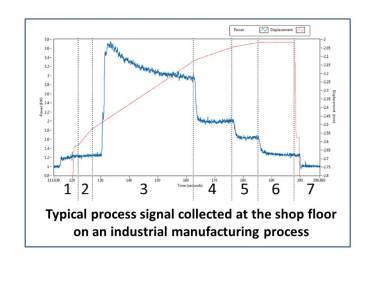
We gratefully acknowledge the opportunity to collaborate with the research team at IIT – Madras along with the industrial partner (Micromatic Grinding Technologies – MGTL). This collaboration has resulted in the development of a portable/mobile diagnostic tool for precision grinding processes, in a record time. The tool has been developed at IIT – Madras and has been validated in the industry through MGTL. This tool has also been used as a tool for the past three years, for teaching grinding science for use by practice oriented engineers and managers in leading manufacturing companies in India. We also acknowledge the collaboration with IMTMA – an industry organization. This is an excellent example of Knowledge Integration and development of manufacturing eco-system based on Inter-industry collaboration, promoted by the STIMS Institute as the foundation for Next Generation Manufacturing.

Performance Analysis of Cylindrical Grinding Process with a Portable Diagnostic Tool

AIMTDR-O0582 Performance Analysis of Cylindrical Grinding Process with a Portable Diagnostic Tool

Authors:  Vairamuthu1, M Brij Bhushan2, R. Srikanth1, N. Ramesh Babu3* — 1Research Scholar, Department of Mechanical Engineering, Indian Institute of Technology Madras, — 2Engineer, Micromatic Grinding Technologies Limited, Bangalore; — 3*Professor, Department of Mechanical Engineering, Indian Institute of Technology Madras, Chennai 600 036, nrbabu@iitm.ac.in

Abstract:       This paper presents an approach to develop a diagnostic tool that can monitor the power drawn by the spindle motor using a power sensor and infeed of grinding wheel using a linear variable differential transformer (LVDT) in cylindrical grinding machine. A combination of spindle power and wheel infeed measurement enables the performance evaluation of grinding process.  This evaluation suggests the possibility of optimizing the grinding cycle in order to enhance the efficiency of grinding process. The effectiveness of the developed in-process, portable diagnostic tool is demonstrated with a case study.

Acknowledgements:     The authors wish to express their sincere thanks to the Office of the Principal Scientific Adviser, Government of India for rendering the financial support to this project. We are extremely grateful to Dr. K. (Subbu), Subramanian, President STIMS Institute Inc., USA, for continuous support through mentoring of team and thought provoking discussions at different stages of this work. We are indeed fortunate to have a strong industrial partnership with Micromatic Grinding Technologies Limited, Bangalore. We are highly indebted to Mr. N K Dhand, Chairman, Micromatic Grinding Technologies Limited for his unrelenting support and encouragement to this activity. We wish to acknowledge the support given by Mr. P J Mohanram, IMTMA, Bangalore during the developmental work.

Sector specific education offered successfully for third year in a row!

We started 2 years ago an initiative in collaboration with  IMTMA (Indian Machine Tool Manufacturers Association).

The purpose is to upgrade the knowledge of  middle & senior level manufacturing engineers with the basic elements of “Systems Thinking of the Manufacturing Processes”, that they deal with every day at the work place. While the “Economics”(OEE or productivity) of these processes is their daily concern, the “Engineering” solutions they work out often lack the “Science”  & science-based fundamentals, which alone can help these engineers “Optimise the Process as a System”.

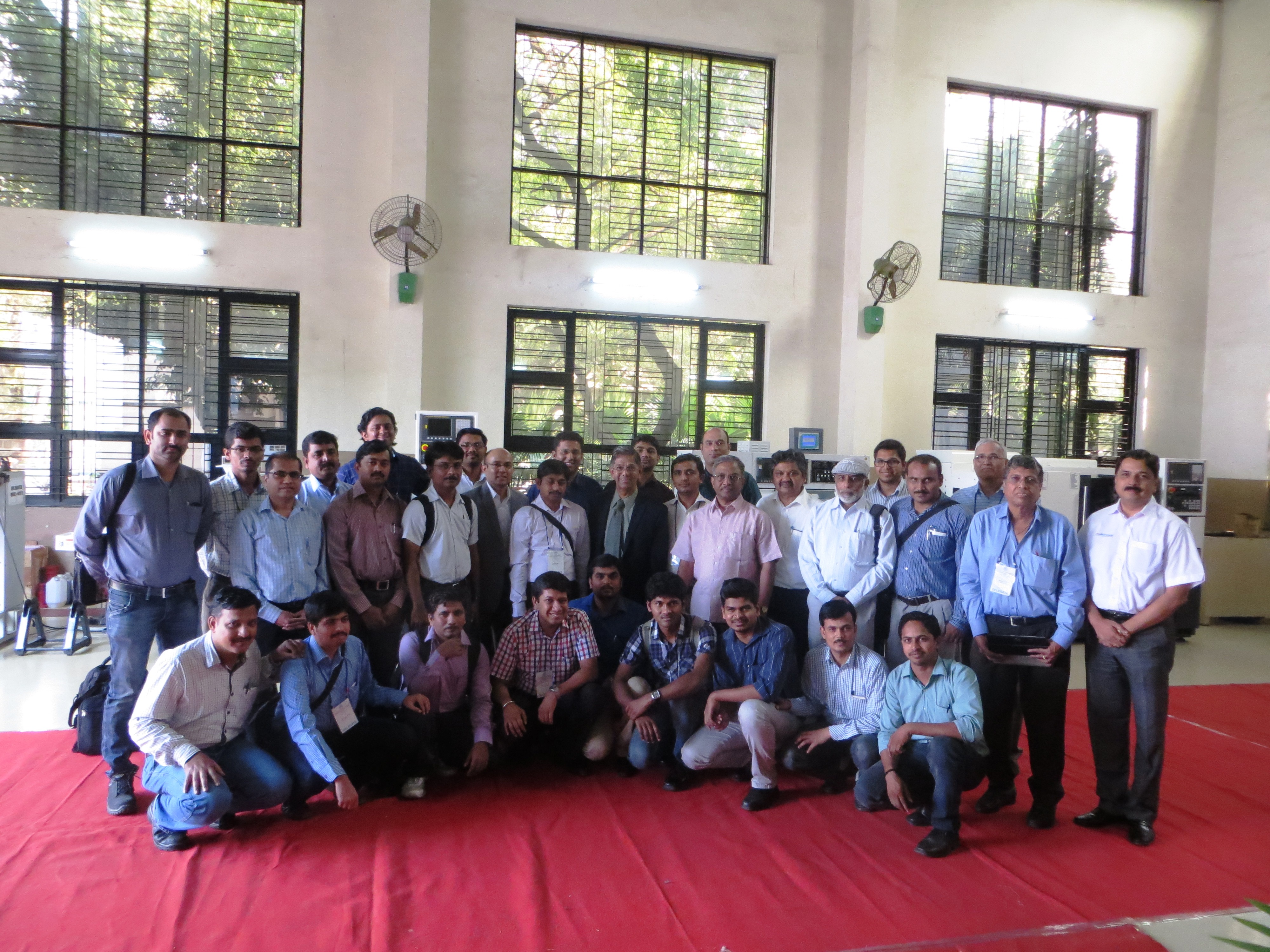
Encouraged by the success of previous two programs, first one launched in South at Bangalore, India in 2012 & repeated in the North at Delhi in 2013, IMTMA  decided to take this program to the West this time. The 3rd program was scheduled at Pune from 19-22 Nov. as per details attached.

Dr. Subbu Subramanian is PhD from MIT-USA, with working experience of over 30 years. He worked at Ford Motor Co. & was the International Director of R&D at Saint-Gobain Ltd. (earlier Norton USA). Now he is the President of STIMS Institute Inc., USA. Through this company he teaches and trains professionals on System Thinking and Knowledge Integration.  He is collaborating with IMTMA, MGT & also with IIT-M Chennai for helping Indian Industries understand & adopt “Systems Approach to Manufacturing”-starting with the Grinding Process. Details are given in the attached brochure with a link of a video of an “interview with Dr. Subbu”  & another link of last year’s “participants feedback”

??????????????????????????????? ??????????????????????????????? ??????????????????????????????? ???????????????????????????????

The success of this program can be seen from the participant feed back.

Overall Evaluation:              
      Excellent Very Good Good Average Poor
      -5 -4 -3 -2 -1
Relevance of Topics     67% 19% 15%   –    – 
Contents     59% 30% 11%   –    – 
Information in presentations     44% 44% 11%   –    – 
Usefulness of this program     48% 48% 4%   –    – 
Physical arrangements (Venue, Food, etc.)              
      56% 30% 15%   –    – 
Your views on lab, Exercise/Practical Session(s)               
      37% 41% 22%   –    – 
Name the presentation(s) or aspect of this program you liked :              
1. The presentation involving the microscopic interactions.              
2. Practical Test & Presentation Sessions              
3. Group Exercise, Trouble Shooting, Measure Analysis              
4. Asking – Why?              
5. Dr.Subbu’s Presentation              
6. Introduction about Abrasives              
7. Knowledge & experience shared by Dr.Subbu is excellent.              
8. Approach towards solving problems by scientific and also Technical way.              
9. The system approach for industrial process.              
What percentage of content presented at this training programme were new to you? 
    More than 25%   Less than 25%       
    89%   11%      

Future of Manufacturing and Core capability Development

ManufacturingSome of the trends noted as the future of manufacturing are:

1. Manufacturing process as a critical core competence

2. “Product as a service”,  as a core part of the overall value proposition.

3, Remote Diagnostics

4. Sensor driven data as the basis for product and service Innovation

More details on these evolving core capabilities can be seen at the end.

We at STIMS Institute execute projects and offer programs for companies – big and small – to advance their internal capabilities and work force skills to position themselves as leaders in each of these emerging growth areas in manufacturing. Unlike most other companies we do not offer a “strategy” and leave the implementation in your hands. Instead we work from end to end, from concept to commercial impact.

As a recent example we identified precision grinding process as a core competence for an auto parts manufacturer. Recognizing that a specific grinding process was the bottle neck operation, we used our process signal monitor to obtain the vital signs of the process. The signal was further used by our expert team trained in the System Approach for Manufacturing processes, to optimize the process and reduce the cycle time by over 40%. This in turn translated into a direct increase in line through put by 40% without any additional capital or plant and equipment investment required!

For more details please contact us

Details on evolving core capabilities in manufacturing:

1. Manufacturing process as a critical core competence: In the case of global agricultural-equipment manufacturer Deere Inc., a key driver for the tractor-manufacturing strategy hinged on drive trains, says Pat Pinkston, Vice President for Global Platform Services for the firm’s Agriculture and Turf Division. The complexities involved in the drive train manufacturing are:

  • The size and configuration of the drive train
  • Customers want different types of transmissions (power shift, infinitely variable, collar shift, or low cost) as part of the overall drive-train package. A further challenge was Deere’s competitive decision
  • Lead-time for building a drive train from 40-50 days to one week.

These layers of complexity quickly made it apparent that the Machining of drive-train castings and gears had to be a core internal competence for the company. That one strategic decision rippled across the length and breadth of Deere’s revamped Waterloo, Iowa manufacturing facility. “We’ve got to continually understand what’s core, what’s non-core, and as the technologies, business, and customer requirements shift, be able to reassess and figure out how to integrate all that in a way that allows us to differentiate.”

2. “Product as a service” as a core part of their overall value proposition.  Rolls Royce no longer just sells airplane engines to its customers. It has a service-based offering called TotalCare that sells only the hours that each engine is in service. From scheduled maintenance to overall management, Rolls Royce guarantees an engine’s performance by taking responsibility for its operations. TotalCare transfers the risks and costs associated with an engine being offline to the vendor, thereby making reliability and uptime major incentives for both the customer and Rolls Royce. Rolls Royce is part of their overall value proposition.

The aerospace/defense industry (74%) and medical device manufacturers (70%) plan to lead with performance-based contracts. Similar to the Rolls Royce TotalCare solution, these contracts are about a customer paying a vendor based on performance against a set of defined metrics.

3. Remote Diagnostics: Ingersoll Rand’s Ohio-based Trane Intelligence Systems, data from 10,000 pieces of  HVAC equipment around the world are managed remotely. Remote diagnostics enable Trane Intelligence Systems to know ahead of time when HVAC filters need to be changed, when oil or bearings are starting to wear, and when Trane should plan for maintenance. Harvesting this data from operations enables more efficient service scheduling for Trane while maintaining uptime across customer premises.

But along the way to better product maintenance, Trane Intelligence Systems realized that the same diagnostic data could be used to adjust the internal temperature of buildings in order to extract better energy use from the equipment. Given that air conditioning can amount to 40% of a commercial customer’s total energy bill, this is not an inconsiderable value proposition.

 4. Sensor driven data as the basis for product and service Innovation: After several product generations spent improving the core compressor design of its Copeland Scroll line of refrigeration units, Emerson’s Climate Systems unit made a strategic decision to focus on sensor-based diagnostics as a differentiator. According to Charles Peters, Senior Executive Vice President at Emerson, the initial reason for equipping the compressors with sensors was to measure use and changes in electric amperage, which is often an indicator measure for a variety of performance or fault conditions.

Source: Manufacturing Transformation – Achieving competitive advantage in a changing global marketplace http://support.ptc.com/WCMS/files/155978/en/Manufacturing_Transformation_Report.pdf