Author: stimsinstitute
Strategic Plan for the accelerated Growth of Small and Medium sized companies
System Approach for Precision Components Manufacturing – Interview
This summer (2012), I had the pleasure of sitting down with Dr. Krishnan, Vice President of the Indian Machine Tool Manufacturers Accociation (IMTMA). We had a great conversation sparked by the current innovation pathway needs in the manufacturing industry. We discussed in detail how the System Approach could be the next wave in manufacturing, after Lean and 6-sigma approaches.
Below is a brief video of our talk.
– Dr. Subramanian
Education for “sustainable jobs and careers” – Why? What? How?
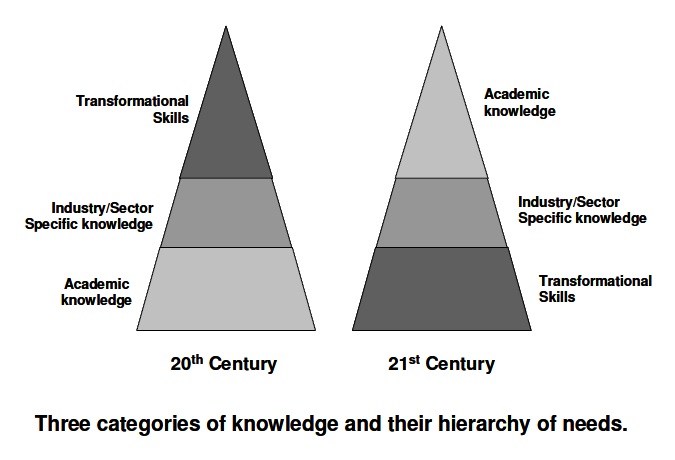
Over the past three decades, I have seen more individuals rise up to the top who are not the smartest (academically advanced in their education), or with extremely high industry/sector specific knowledge. Instead, I see those rise to the top, who have an uncanny ability to identify an “opportunity”, frame it as a problem in a broader context (as a system) and arrive at their solution using resources readily accessible near by or at far corners of the globe. They are also able to implement such solutions of benefit for those who have the capacity and influence to reward such solutions.
Those who are successful in any field today are all “IBMers” in our thoughts and action. This is what makes us connect and configure quickly and effectively on the problems we face in our jobs and careers. It is a passion to find a way to connect, define the “problem” and address it effectively, to make the world a “better place”!
Read more about transformational skills for the 21st century here.
The system Approach to precision manufacturing – Grinding Processes
Need to go beyond Lean and Continuous Improvements?
Do you need step change in cost, quality and productivity?
Earlier this year, Dr. Subramanian led a workshop on the System Approach for associates of the Indian Machine Tool Manufacturers’ Association (IMTMA). Students participated in hands-on, laboratory style experiments, where they collected and analyzed data during grinding processes.
Key learnings from the workshop included:
- Looking at the manufacturing process “as a whole” as a system
- Achieving large scale improvements through the application of Science, Engineering and Management principles together (and not as isolated pockets)
- Learning about the “Microscopic interactions” (i.e) what really happens when the sparks are produced?
More information about the workshop here: Training Program on Grinding.